POLICE RATTLES, CLAPPERS & WHISTLES
The rattle or clapper was the forerunner of the whistle and was used to call for help and to give the alarm during the night in the case of fire
Prior to the use of police whistles, constables used hand rattles, clappers or nightsticks for signal purposes. All three were used to call for assistance in areas where beats overlapped, and following their success, the whistle was adopted by most forces in United Kingdom, and around the world.
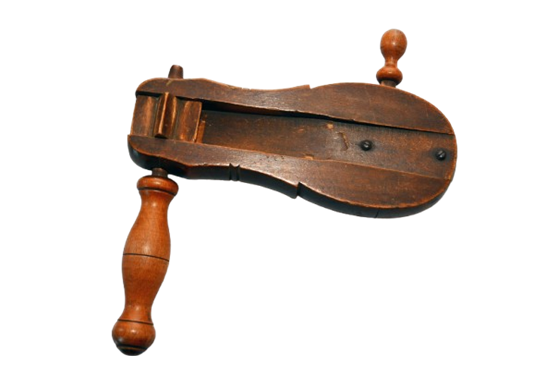
The origin of the rattle is not clear, but what has come to be known as the “Victorian Police Rattle” came into use sometime in the late seventeenth or early eighteenth century when used to “raise the alarm”.
Wooden clappers were carried by officers and used when they were in need of assistance. The officer would shake the clappers as hard as they could. It is from this that the phrase “Run like the clappers” comes.
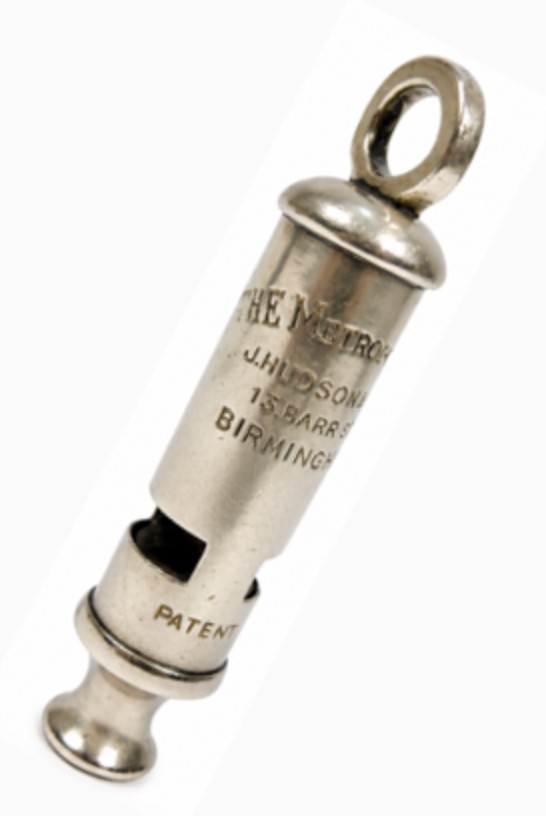
In 1883 the Metropolitan Police conducted tests and found that the sound from a whistle could be heard at 1000 yards – almost twice the effective distance of a rattle. Thereafter whistles were issued in place of rattles and clappers.
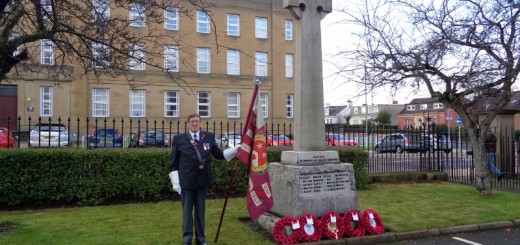
Police whistles fell into disuse in many countries in the mid-1900s, when early hand-held radios were brought into service. However, in Scotland, the whistle was issued until the mid-1990’s.
Items Provided By: The Lanarkshire Police Historical Society
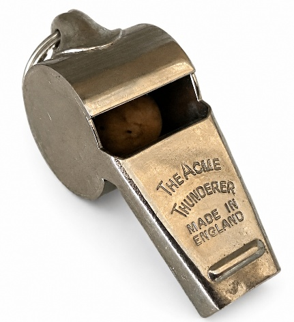
- The Acme ‘Thunderer’ police whistle – also known as the ‘Escargot’ or ‘Snail’
The Hudson ‘Metropolitan’ police whistle – named after The Metropolitan Police who were the main customer of the Hudson company of Birmingham. (The longer straight Whistle)